primary components involved in flex rigid pcb manufacturer
Flex rigid PCBs, short for flexible rigid printed circuit boards, represent a critical innovation in modern electronics. These boards offer a unique combination of flexibility and rigidity, making them ideal for applications where space, weight, and reliability are paramount. From medical devices to aerospace technology, flex rigid PCBs are ubiquitous in industries requiring intricate electronic designs. Understanding the primary components involved in their manufacturing unveils the intricate process behind these versatile circuit boards.
At the core of flex rigid PCB manufacturing are the substrate materials. These materials serve as the foundation upon which the entire circuit is built. Typically, flex rigid PCBs utilize a combination of flexible and rigid substrates, allowing for both flexibility and structural integrity. Common flexible substrates include polyimide and polyester, known for their high heat resistance and flexibility. Rigid substrates, often made of fiberglass-reinforced epoxy laminate, provide stability and support to the overall structure.
One crucial component in flex rigid pcb manufacturer is the conductive layer. This layer is responsible for carrying electrical signals throughout the circuit. Copper is the preferred material for conductive layers due to its excellent conductivity and adherence to substrate materials. In the manufacturing process, copper foil is laminated onto the substrate using heat and pressure, forming the conductive pathways necessary for electronic connectivity.
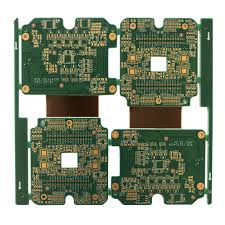
What are the primary components involved in flex rigid pcb manufacturer?
To ensure the reliability and longevity of flex rigid PCBs, a protective layer is applied over the conductive traces. This protective layer, commonly known as solder mask, shields the copper traces from environmental factors such as moisture, dust, and corrosion. Solder mask also prevents unintended electrical connections and facilitates soldering during assembly. Additionally, solder mask comes in various colors, aiding in the visual identification of different circuit elements.
Another essential component in flex rigid PCB manufacturing is the surface finish. Surface finish serves multiple purposes, including enhancing solderability, preventing oxidation, and improving electrical performance. Common surface finish options include immersion gold, electroless nickel immersion gold (ENIG), and immersion silver. Each surface finish has its advantages and is chosen based on the specific requirements of the application.
The vias and interconnections play a crucial role in flex rigid PCBs, enabling electrical connections between different layers of the circuit. Vias are small holes drilled through the substrate, allowing conductive pathways to pass from one layer to another. In flex rigid PCB manufacturing, special attention is given to the design and placement of vias to ensure flexibility without compromising electrical connectivity.
The final component in flex rigid PCB manufacturing is the assembly process. This stage involves placing electronic components onto the PCB and soldering them into place. Due to the unique design of flex rigid PCBs, specialized assembly techniques may be required to accommodate their flexibility and complex geometry. Advanced robotic assembly systems ensure precise component placement, while reflow soldering techniques ensure reliable electrical connections.
In conclusion, flex rigid PCB manufacturing involves a meticulous process that combines flexible and rigid materials with conductive layers, protective coatings, surface finishes, vias, and assembly techniques. These components work together to create circuit boards that are both flexible and reliable, making them indispensable in modern electronics. As technology continues to advance, the demand for flex rigid PCBs will only continue to grow, driving further innovation in their manufacturing processes.